
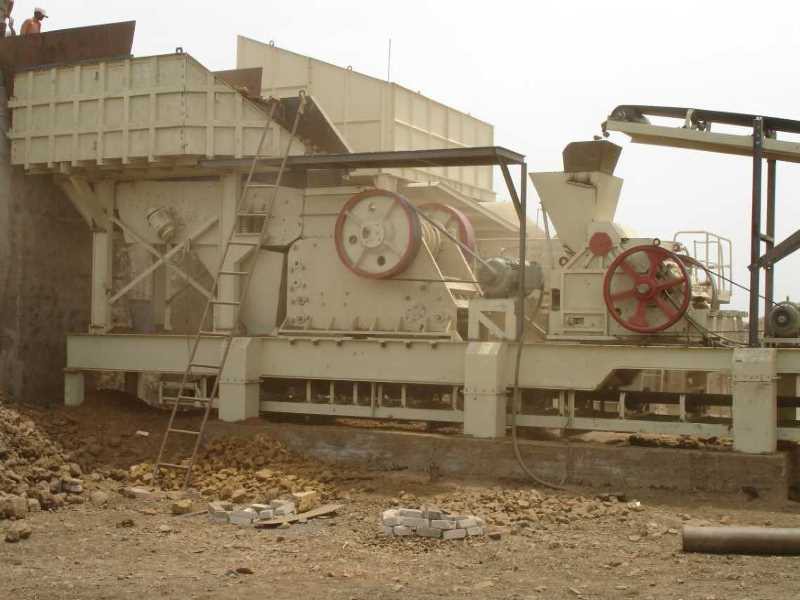
Why the capacity on a brochure is not always the capacity you get, and how feed, setting and screening decide the real tonnes per hour.
Crusher capacity is quoted in tonnes per hour (TPH), but the figure on a brochure assumes standard conditions. On site, several factors move the real number up or down.
What affects capacity
- Closed side setting (CSS): a wider setting passes more material; a tighter setting makes finer product but fewer tonnes.
- Feed grading: a well-graded feed with fines removed by a grizzly crushes faster than a feed full of slabs or dust.
- Rock hardness and moisture: hard, sticky or wet material lowers throughput.
- Bulk density: capacity tables usually assume around 1.6 t/m³ loose material.
- Feeding method: a steady, choke-fed chamber is far more productive than stop-start feeding.
Balance the whole circuit
A plant is only as fast as its slowest component. Check that the feeder, each crusher, the screens and the conveyors are all sized for the same tonnage, including the material that recirculates from the screen back to the crusher.
Simple example
| Stage | Target |
| Primary jaw | 150 TPH at a CSS that feeds the cone well |
| Secondary cone | 150 TPH new feed + recirculating load from the screen |
| Screen | Area sized for total feed, not only the saleable product |
Our engineers size every crushing and screening plant as a complete circuit, so the crushers, vibrating screens and feeders work together.
Talk to our engineers
Every site is different. Share your material, feed size, required output and site conditions through our sales inquiry form or call us, and the Shree Conmix Engineers team in Ahmedabad will recommend the right equipment.