
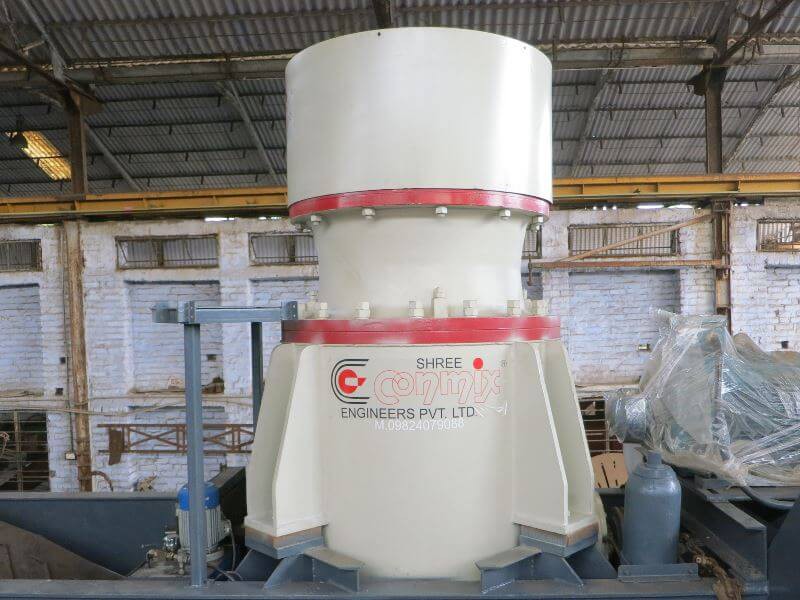
Jaw crushers and cone crushers are not competitors; they do different jobs in the same plant. Here is how to decide where each one belongs.
One of the most common questions we hear is “should I buy a jaw crusher or a cone crusher?” The honest answer is that most aggregate plants need both, because they work at different stages of size reduction.
The jaw crusher: primary reduction
A jaw crusher squeezes rock between a fixed jaw and a moving jaw. Its large feed opening accepts big boulders straight from the blast or the excavator, and it reduces them to a size the next stage can handle. Jaw crushers are simple, robust and tolerant of dirty or sticky feed.
The cone crusher: secondary and tertiary reduction
A cone crusher crushes rock between a gyrating mantle and a concave liner. It accepts smaller feed than a jaw but produces a more uniform, better-shaped product at a finer setting, which is exactly what road base, concrete aggregate and asphalt chips require.
Side by side
| Jaw crusher | Cone crusher | |
| Typical stage | Primary | Secondary / tertiary |
| Feed size | Large boulders | Pre-crushed material |
| Product shape | Flakier | More cubical |
| Best with | Hard and soft rock, recycling | Hard, abrasive rock |
| Wear parts | Jaw plates | Mantle and concave |
When you need a third machine
If you are producing manufactured sand or need very cubical chips, add a Vertical Shaft Impactor after the cone. The VSI uses rock-on-rock impact to shape particles and generate sand.
A typical three-stage plant
- Vibrating grizzly feeder removes fines and feeds the jaw crusher.
- Jaw crusher reduces boulders to around 150 to 200 mm.
- Cone crusher reduces to 40 mm and below.
- VSI shapes the product and makes sand.
- Vibrating screens split the output into the sizes you sell.
Talk to our engineers
Every site is different. Share your material, feed size, required output and site conditions through our sales inquiry form or call us, and the Shree Conmix Engineers team in Ahmedabad will recommend the right equipment.