
With river sand increasingly restricted, manufactured sand has become the default for concrete. Here is how a VSI crusher makes it, and what affects quality.
River sand mining is restricted in many states, and builders now rely on manufactured sand (M-Sand) for concrete and plaster. The machine at the heart of most M-Sand plants is the Vertical Shaft Impactor (VSI).
How a VSI works
Feed drops into a rotor spinning at high speed. The rotor throws the stones outwards against an anvil ring or a bed of rock (rock-on-rock). The impact breaks the stones along natural weakness lines, giving cubical particles and a controlled amount of fines.
What makes good M-Sand
- Shape: cubical, not flaky, so concrete flows and compacts well.
- Grading: a balanced spread of particle sizes within the zone required by the concrete design.
- Controlled micro-fines: too much dust raises water demand; washing or air classification keeps it in check.
- Clean, sound parent rock: the sand can only be as good as the rock it comes from.
Factors you can control
| Setting | Effect |
| Rotor speed | Higher speed gives more sand and finer output |
| Feed size | Keep it within the rotor's limit for even wear |
| Cascade (bypass) feed | Adjusts the shape and the amount of fines |
| Recirculation through the screen | Oversize returns to the VSI for a closed circuit |
Plant layout
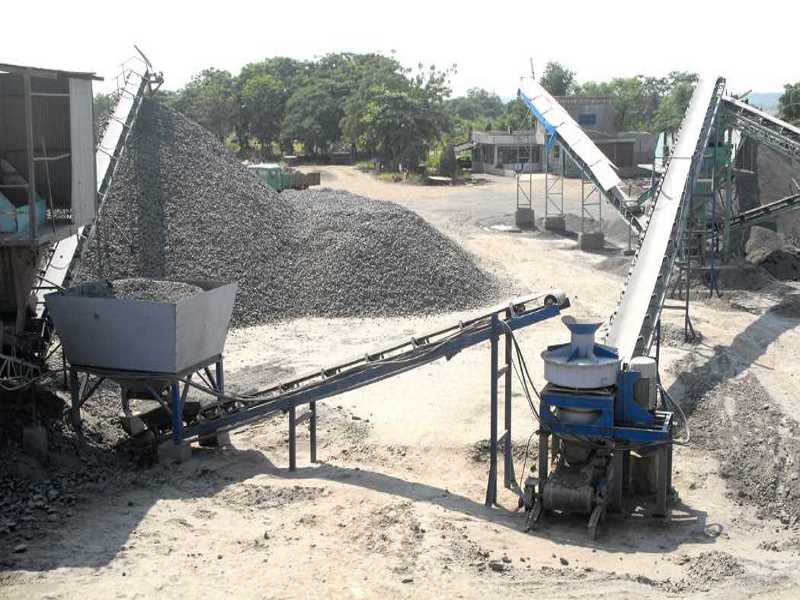
A typical sand line takes 0 to 40 mm material from a cone crusher, feeds the VSI, then screens the output on a vibrating screen. Oversize returns to the VSI and the sand fraction goes to washing or classification. For projects that move between sites, the same process is available on a track mounted VSI plant.
Talk to our engineers
Every site is different. Share your material, feed size, required output and site conditions through our sales inquiry form or call us, and the Shree Conmix Engineers team in Ahmedabad will recommend the right equipment.